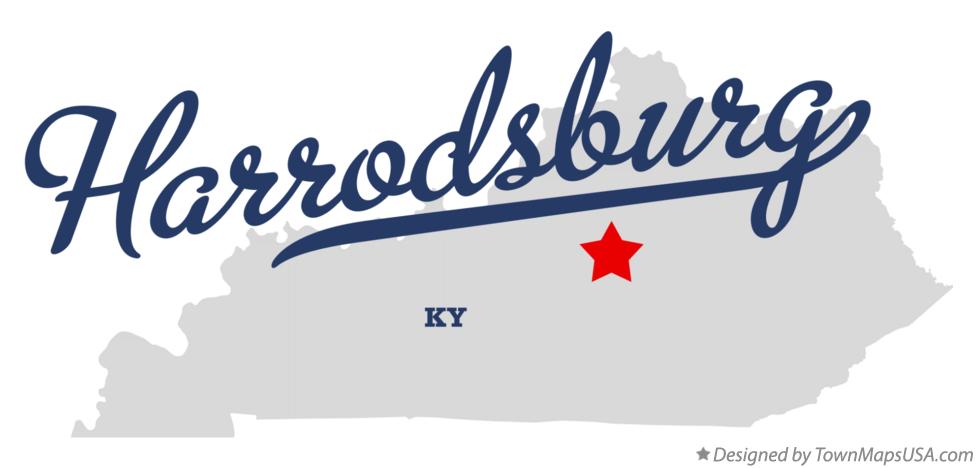

Just up the street from Danville and about an hour from Bardstown, Frankfort, Lexington, and Louisville, Harrodsburg offers respite from the Bourbon Trail and quite a few surprises
Sometimes the best adventures don’t come from grand plans but from unchecked impulses. For me, it was a fiddle leaf fig on Facebook Marketplace that sparked an impromptu road trip. That’s how I found myself loading up the dogs and heading out on what I told myself was just a “quick errand” to Harrodsburg.
Heading east out of Bardstown on the Lincoln Heritage Scenic Highway, it was pleasant enough rolling toward Springfield. But just past the new roundabout (where Hwy 555 meets Hwy 150) came the hard left onto Kentucky Route 152, pointing me toward Harrodsburg.
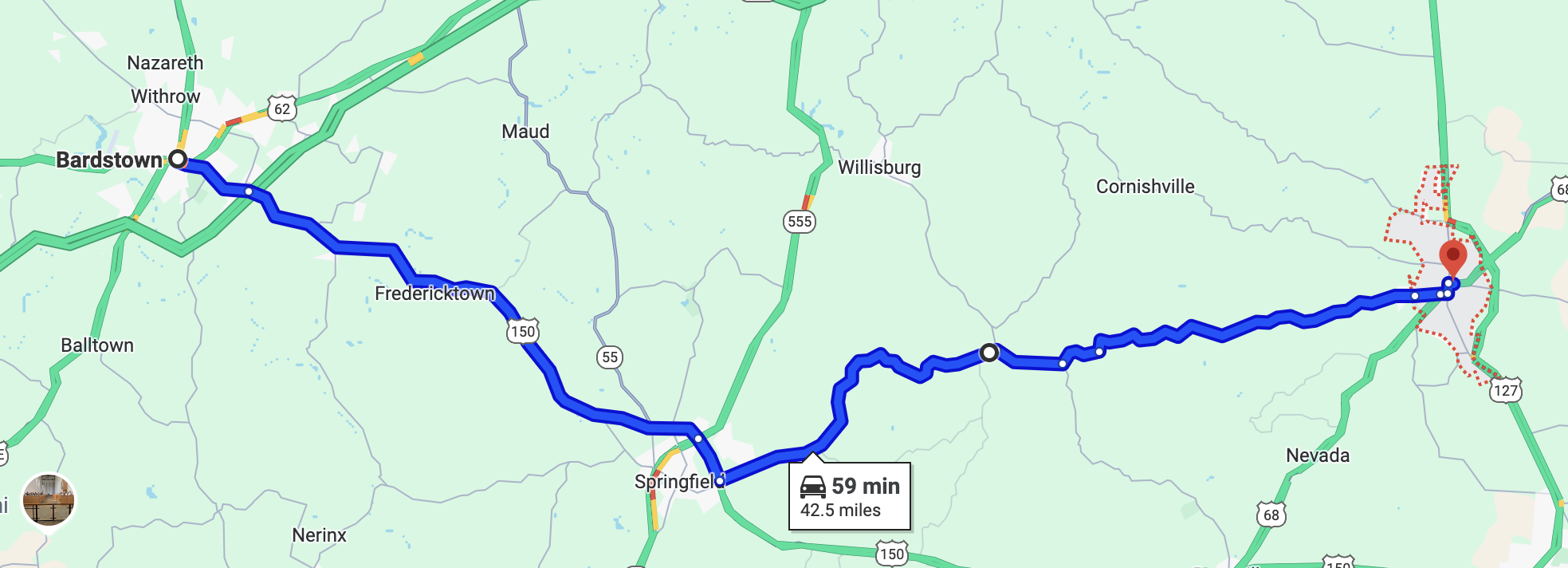
That’s when the scenery really began. The land started to rise and fall in green waves, farmland turned hilly, and the pavement curled like ribbon around a World War II pinup model. This was the kind of road that reminds me why I’ve only ever driven a Mazda. The brand’s engineers designed the chassis for agility—what they call Jinba Ittai, “horse and rider as one.” She handled those curves with the warm assurance of a grandma’s hug. But I digress…
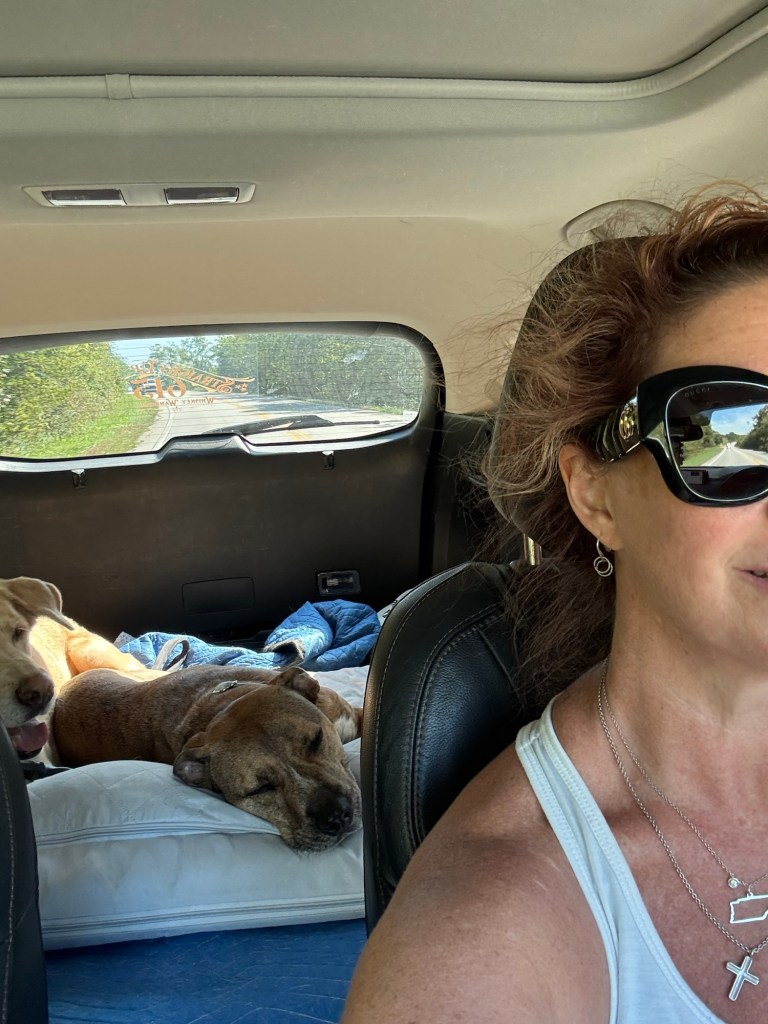
I wasn’t the only one reveling in the ride. Olivia and Cooper were in full doggy bliss, ears flapping, tongues lolling, their heads stuck out the windows as if they’d been waiting their whole lives (or all morning) for this stretch of road.
I may have set out chasing a houseplant, but I stumbled into history.
Meeting Mike and a Fig Tree
My first stop was to meet Mike, the fiddle leaf fig seller and a kindred spirit in the green-thumbed way. He handed over my new plant baby with a smile and a dose of local wisdom: “You know, Harrodsburg is the oldest city in Kentucky. You ought to check out Main Street and the old Fort.”
With that, whimsy gave way to history.
A City Older Than Kentucky
Harrodsburg, as it turns out, is no ordinary Kentucky town. Founded in 1774, it was the Commonwealth’s very first permanent settlement. Before Lexington’s horse farms or Louisville’s bourbon warehouses, there was Harrodsburg—founded by James Harrod and 31 men who built Fort Harrod on the edge of the frontier.
The dogs and I stretched our legs in the historic district on our way to Old Fort Harrod State Park. Along the way I passed several shops where I could have happily emptied the rest of my wallet, but the dogs saved me from anything more than window shopping.
Old Fort Harrod
Just three blocks from Main Street, we reached the Fort. Schoolchildren on a field trip were picnicking under the shade of the “unofficial” largest Osage orange tree in the United States, ‘Big Ole Tree’. (Harrodsburg is full of surprises!) I wandered past the Pioneer Cemetery—the oldest cemetery in Kentucky and the oldest west of the Alleghenies—into the replica fort.
Inside, the Fort tells its story not just through buildings but through people. Craftspeople in pioneer dress demonstrate the skills that once defined survival: blacksmiths hammering hot iron into tools, women quilting patterns that held both warmth and family memory, and artisans carefully stitching dolls by hand. These living demonstrations bridge centuries, showing how the frontier wasn’t just endured—it was built, piece by piece, with craft and care.


I couldn’t help but wonder why the park doesn’t demonstrate a farm still in action. After all, those early settlers were farmers first, and many carried crude little stills to turn surplus grain into liquid that could outlast the winter. The resulting spirits weren’t for cocktail hours, of course—they were barter, medicine, and survival in a jug. (But there I go digressing again…)
The park also holds the Lincoln Marriage Temple, which shelters the log cabin where Abraham Lincoln’s parents were married on June 12, 1806. One nearby tourist speculated aloud that perhaps the 16th President himself was conceived there. I can’t find any evidence to confirm this, but it certainly adds a wink of folklore to the story.
Exploring Main Street & Beyond
On the walk back toward Main Street, I discovered St. Philip’s Episcopal Church. Built in 1860, this Gothic Revival gem of brick and limestone has weathered war, peace, and generations of parishioners. For a moment, I imagined the footsteps of pioneers, parishioners, and wanderers like me traveling that same path from the Fort.


By then, my stomach was lobbying for attention. A friendly stranger directed me to the Blackbird Bakery & Café. “Go ‘round back,” they said with a smile. Sure enough, behind the building I found a deck perfect for the dogs to lounge while I ordered inside.
The café has its own story: Constructed in 1865, this building was originally Dedman’s Drugstore, an apothecary that once beckoned patrons with the dual promise of remedies and a soda fountain’s sweet treats. The store served as a functioning pharmacy from 1868 until 1983. Many of the historic features were preserved, including original cherry cabinets and glass display cases. Today it’s a cheerful café with good food and hometown vibes—exactly what I needed before more exploring.
Beaumont and Broadway
Main Street itself sits on a slope, lined with 19th-century storefronts glowing in the autumn sunshine. From there I wandered up to Beaumont Avenue, where grand old mansions stand with porches and columns like guardians of memory. The highlight was the Beaumont Inn.


Built in 1851, it originally housed Daughters College—one of the few female colleges in Kentucky to offer women a curriculum on par with men’s institutions. Since 1919, the property has operated as an inn and restaurant, now run by the sixth generation of the family that first transformed it from a college.
Finally, I pointed the Mazda down West Broadway Street—Kentucky’s oldest street—heading out of town. By then, the fiddle leaf fig was belted in like precious cargo, and the dogs had collapsed into satisfied naps. Harrodsburg had worked its quiet magic.
Whimsy, History, and What’s Next
I had set out for a houseplant, but I found a city that predates Kentucky itself—a place that balances deep history with small-town charm. Harrodsburg may be the state’s oldest city, but to me, it felt brand new: discovered on a whim, remembered as a gift from a stranger named Mike.
This is just the first of what I hope will be many spontaneous day trips across the Bluegrass. Some will no doubt lead me to distilleries (an occupational hazard), but sometimes it’s the side roads, scenic highways, and unexpected cafés that make the best stories.
 Straight Up 615